
Youth BJJ
Six to twelve is the window. Kids change more in these years — physically, mentally, socially — than at almost any other point in their lives. The habits, the body awareness, the way they handle stress, the way they see themselves — most of it gets wired in right here. A strong foundation now pays off for the rest of their life.
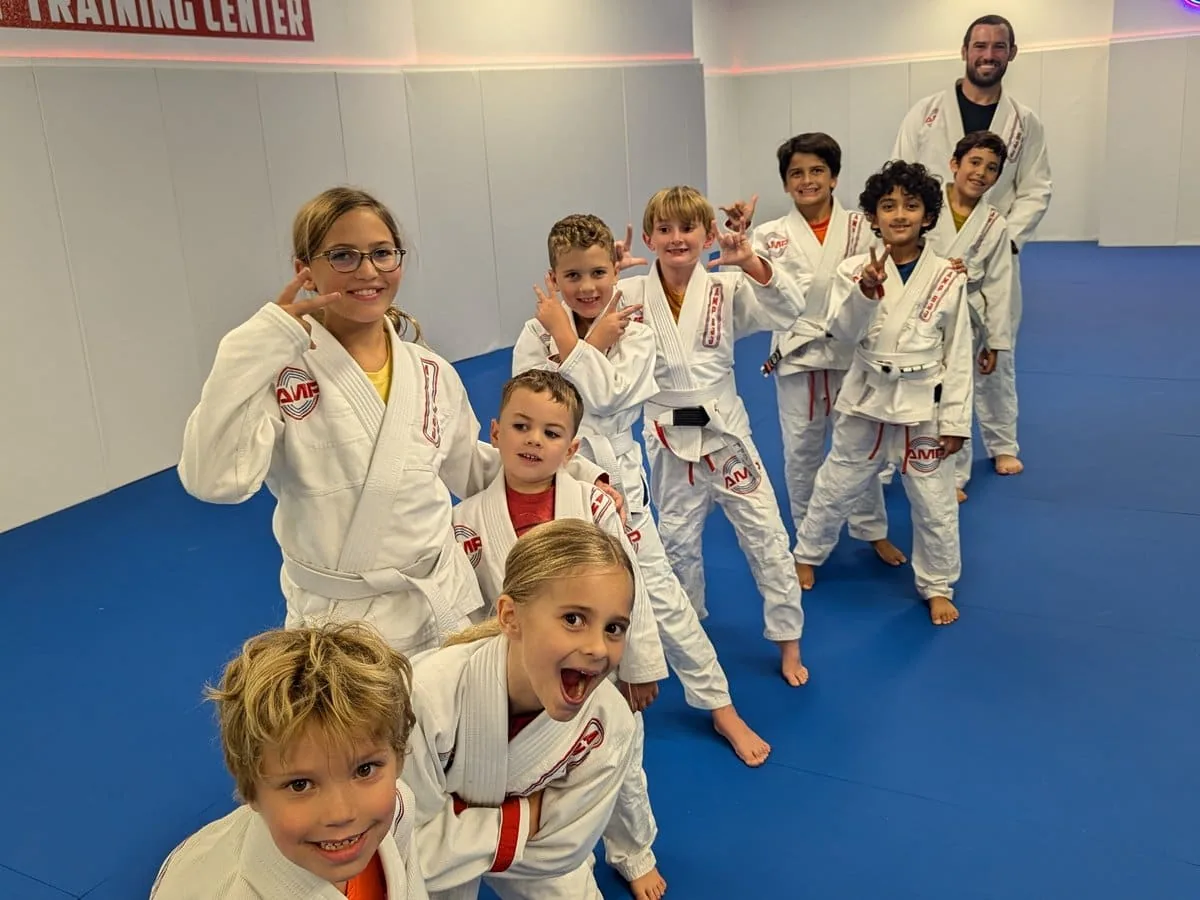
Youth ages 6 to 13 — the shy ones, the wild ones, the anxious ones, the ones glued to a screen, and the ones with more energy than the house can hold.
- Real, age-appropriate self-defense — how to handle being grabbed, pushed, pinned, or taken down without panicking
- Confidence that shows up at school, at tryouts, and in hard conversations — not just on the mat
- Focus, listening, and the ability to keep working when something is hard
- How to lose a round, shake hands, and come back stronger — and how to win without being a jerk
- Body awareness, coordination, balance, and the kind of strength you can't get from a screen
- Discipline and respect for coaches, teammates, and themselves
- Classes grouped by age and experience so kids train with peers who match them
- Skill-based belt and stripe progression — promotions are earned, never handed out
- Coaches who are parents themselves and know how to read a kid having a hard day
- Safe, controlled training — no striking, no reckless contact, real supervision
- Older kids and upper belts who mentor the newer kids on the mat
- Parents welcome to watch from the side anytime — we have nothing to hide
Pick the AMP academy nearest you.
AMP BJJ Westlake Hills
Youth BJJ on 4201 Bee Caves Rd.
View local pageAMP BJJ Northwest Hills
Youth BJJ on 3808 Spicewood Springs Rd.
View local pageAMP BJJ Cedar Park
Youth BJJ on 3621 E Whitestone Blvd.
View local pageAMP BJJ Baton Rouge
Youth BJJ on 7731 Perkins Rd.
View local pageYouth BJJ — common questions.
What's the best age to start kids in martial arts?
Ages 6 to 13 is the foundation window. Habits, body awareness, and confidence wired in during these years pay off for life. Younger kids can start in our Preschool program (ages 3 to 5).
Will my kid actually learn self-defense?
Yes. Kids learn what to do if someone grabs, pushes, or pins them — how to create space, get to their feet, and get away. We take the self-defense piece seriously without making kids paranoid.
What if my kid is shy, anxious, or has ADHD?
BJJ is one of the most-recommended martial arts for kids with these challenges. It channels high energy into focused problem-solving, gives immediate feedback, and builds confidence through visible progress. Our coaches are parents and know how to read a kid having a hard day.
Do you do belt promotions?
Yes — skill-based belt and stripe progression. Promotions are earned, never handed out.